The complaint: a built-in that went quiet
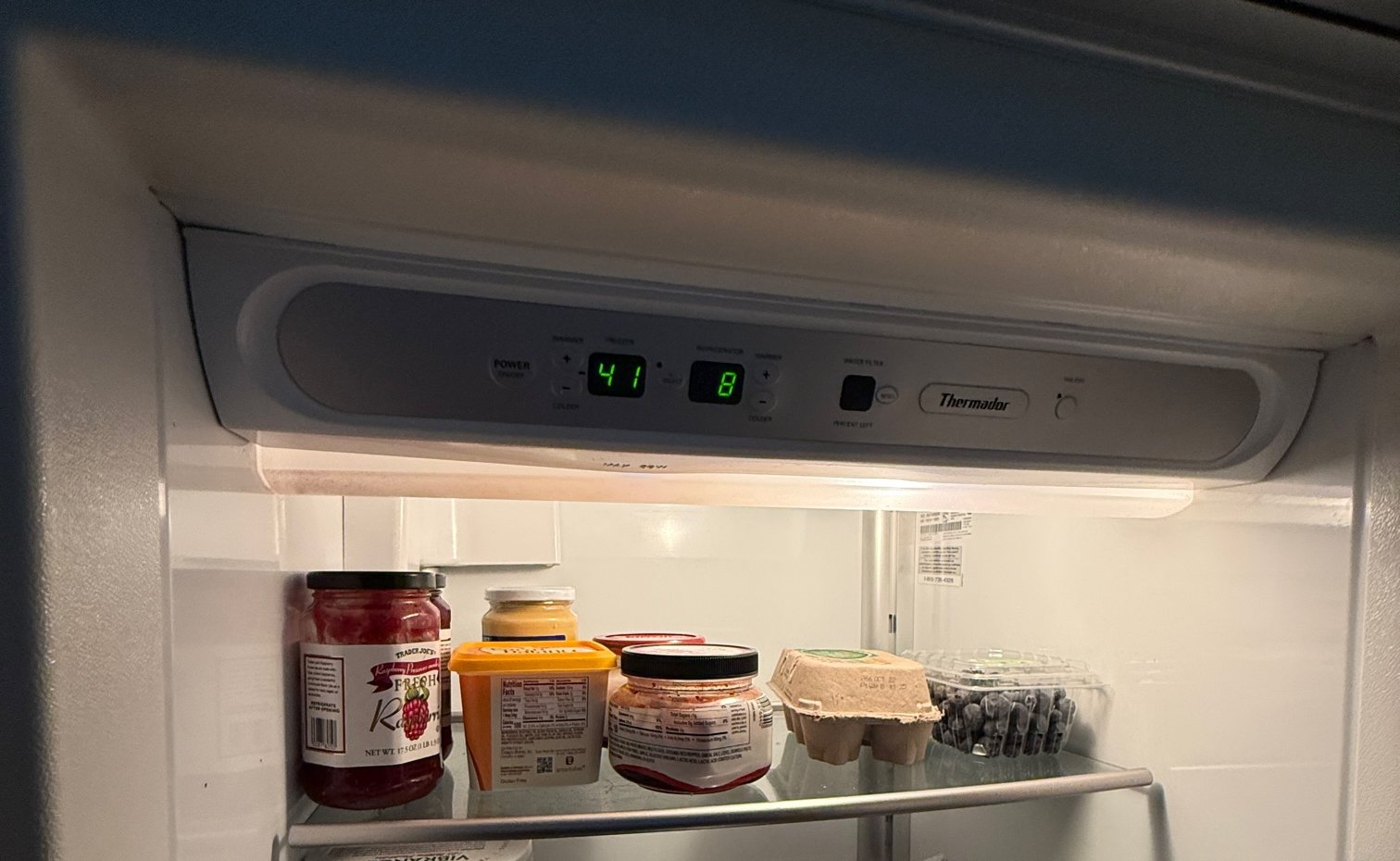
The call came in at 8:16 AM: a Thermador built-in refrigerator near Hancock Park had stopped cooling. We booked the noon window and our technician Mike was at the door at 11:48. The unit is a 42-inch stainless side-by-side set into a cherry cabinet wall, built in July 2011, running R-134a with a 7.5-ounce charge. Interior lights worked, the display worked, the fans ran, and the cabinet was warming. The one thing missing was the sound of a compressor.
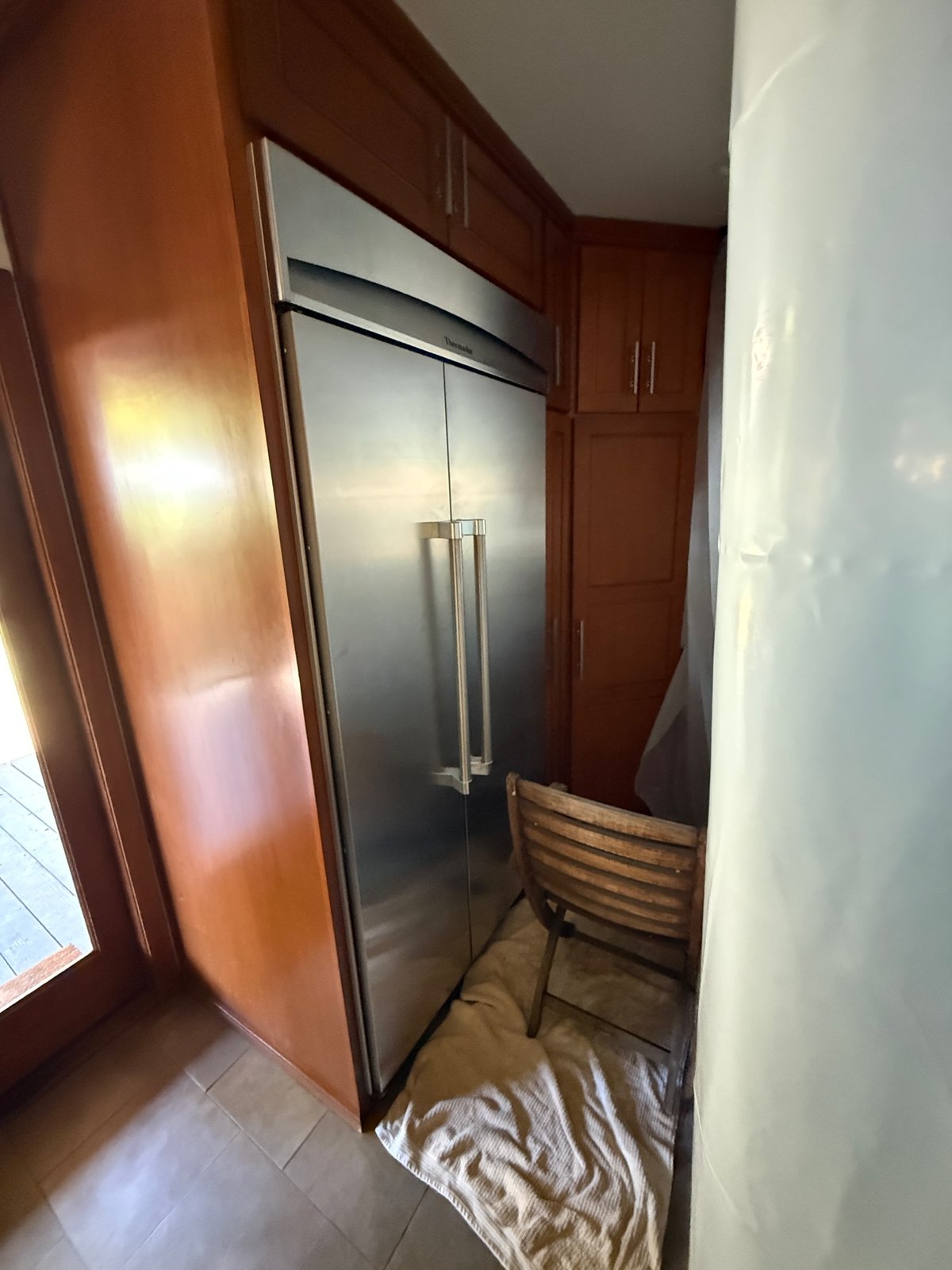
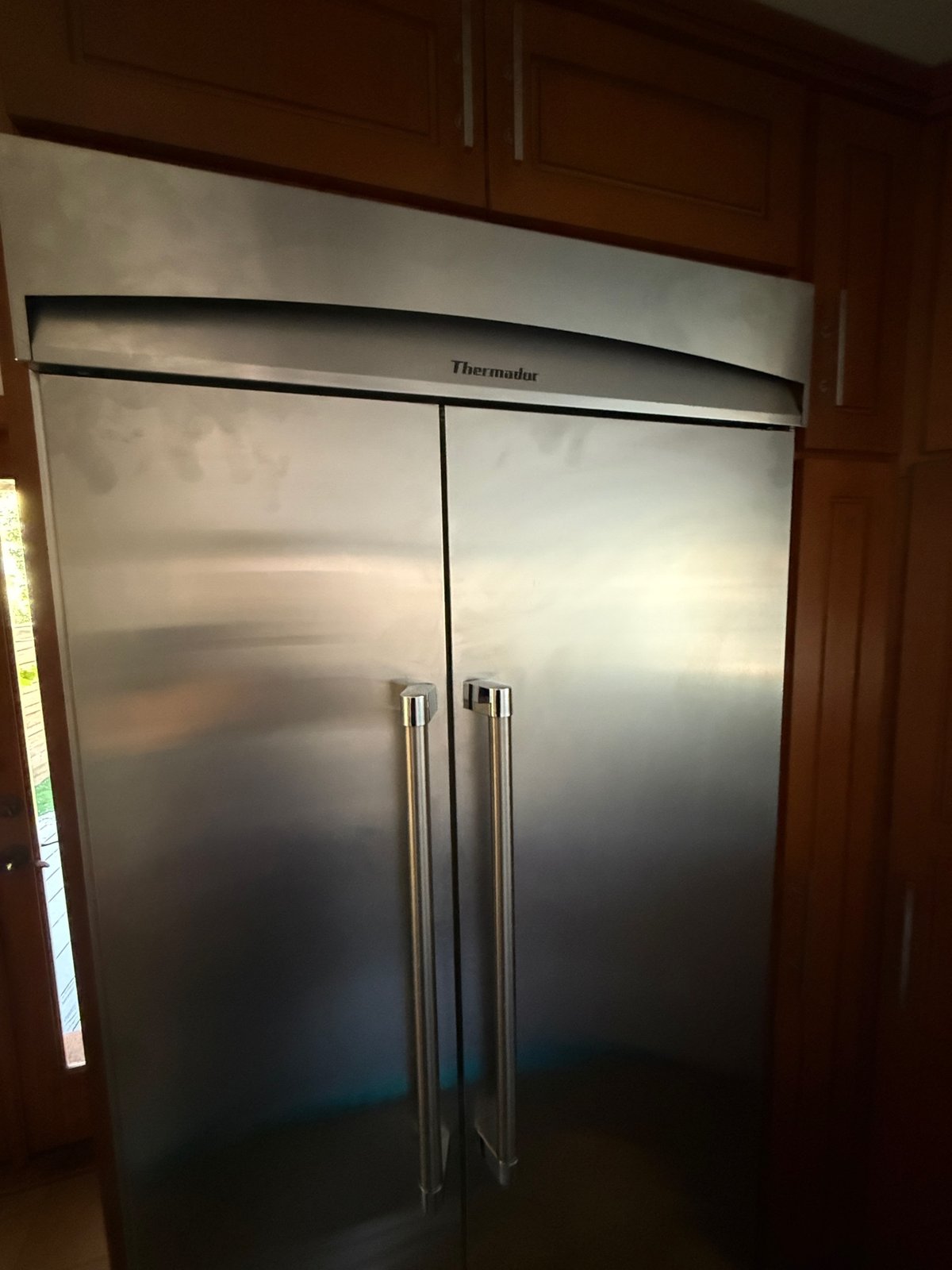
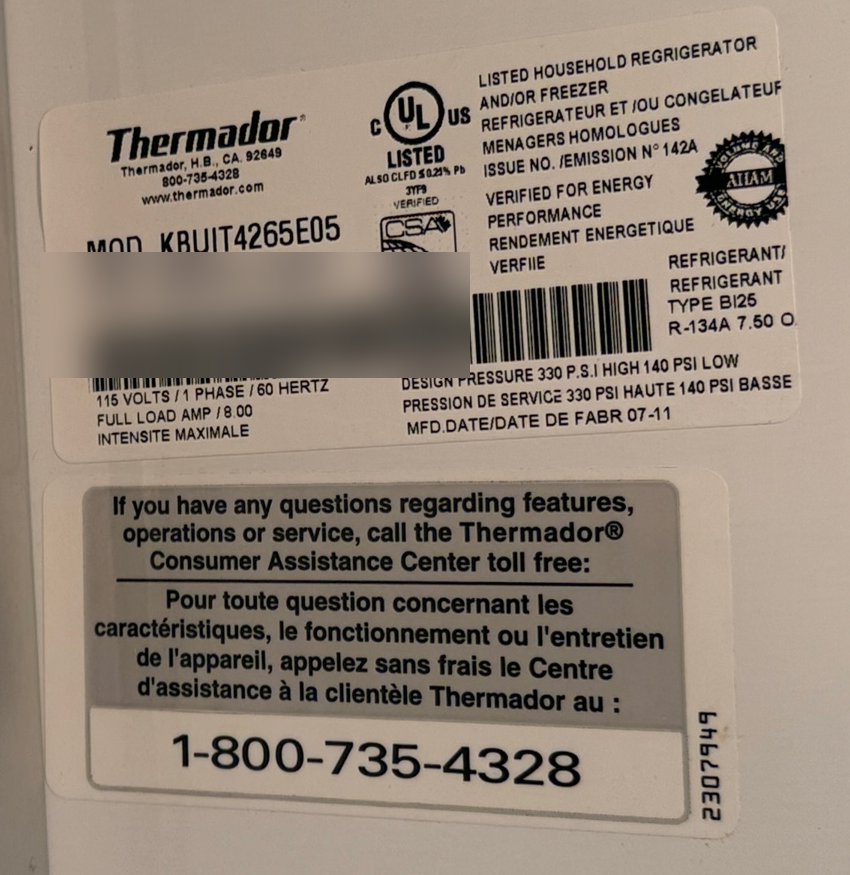
Why this Thermador has a Whirlpool part inside
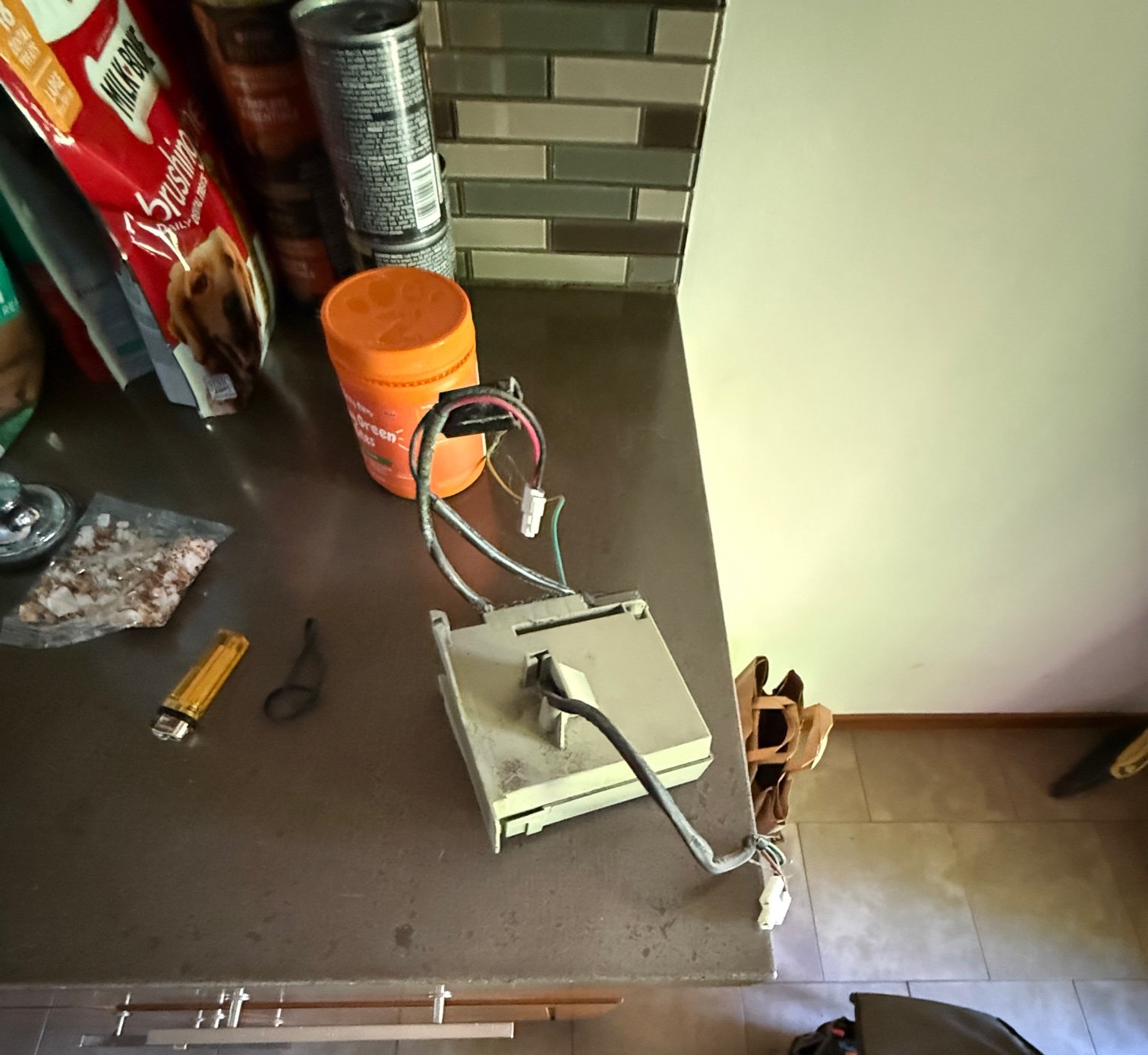
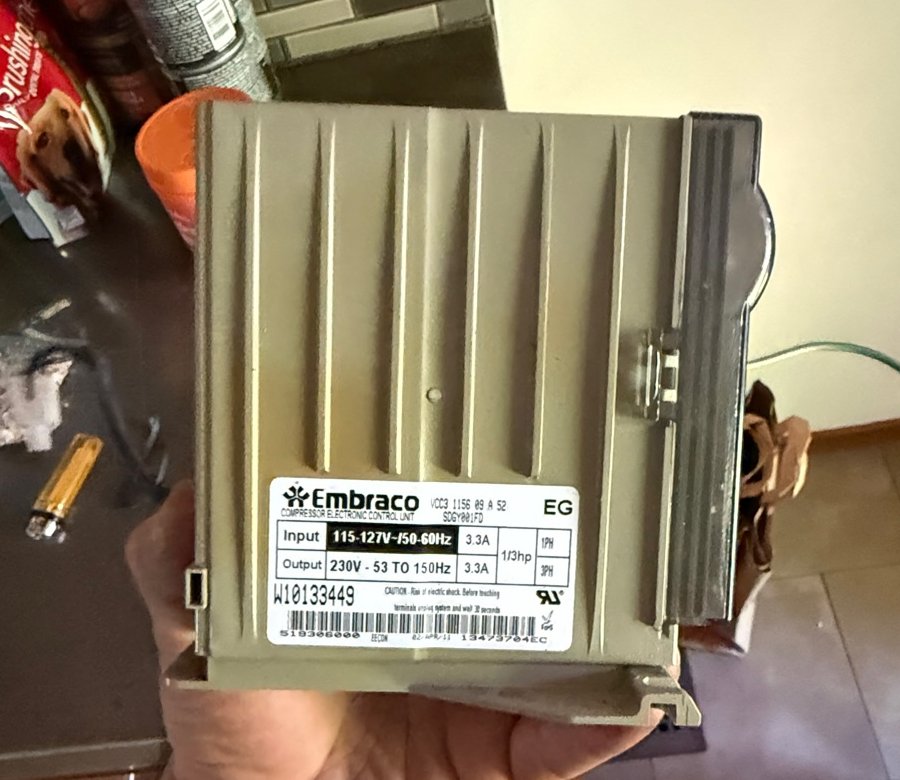
A detail that matters for the diagnosis: this generation of Thermador built-in refrigerators, the KBUIT and KBUDT models sold from roughly 2007 to 2012, was built for Thermador by Whirlpool on the same platform as KitchenAid's built-ins. Open the machine compartment and you find the KitchenAid layout: egg-crate foam lining, an Embraco variable-speed compressor, and a grey inverter module with a Whirlpool part number on its label. That inverter is the heart of the cooling system. It takes ordinary 115-volt household power and turns it into three-phase power at anywhere from 53 to 150 hertz, which is how a variable-speed compressor runs slow and quiet most of the day and fast when the doors have been open.
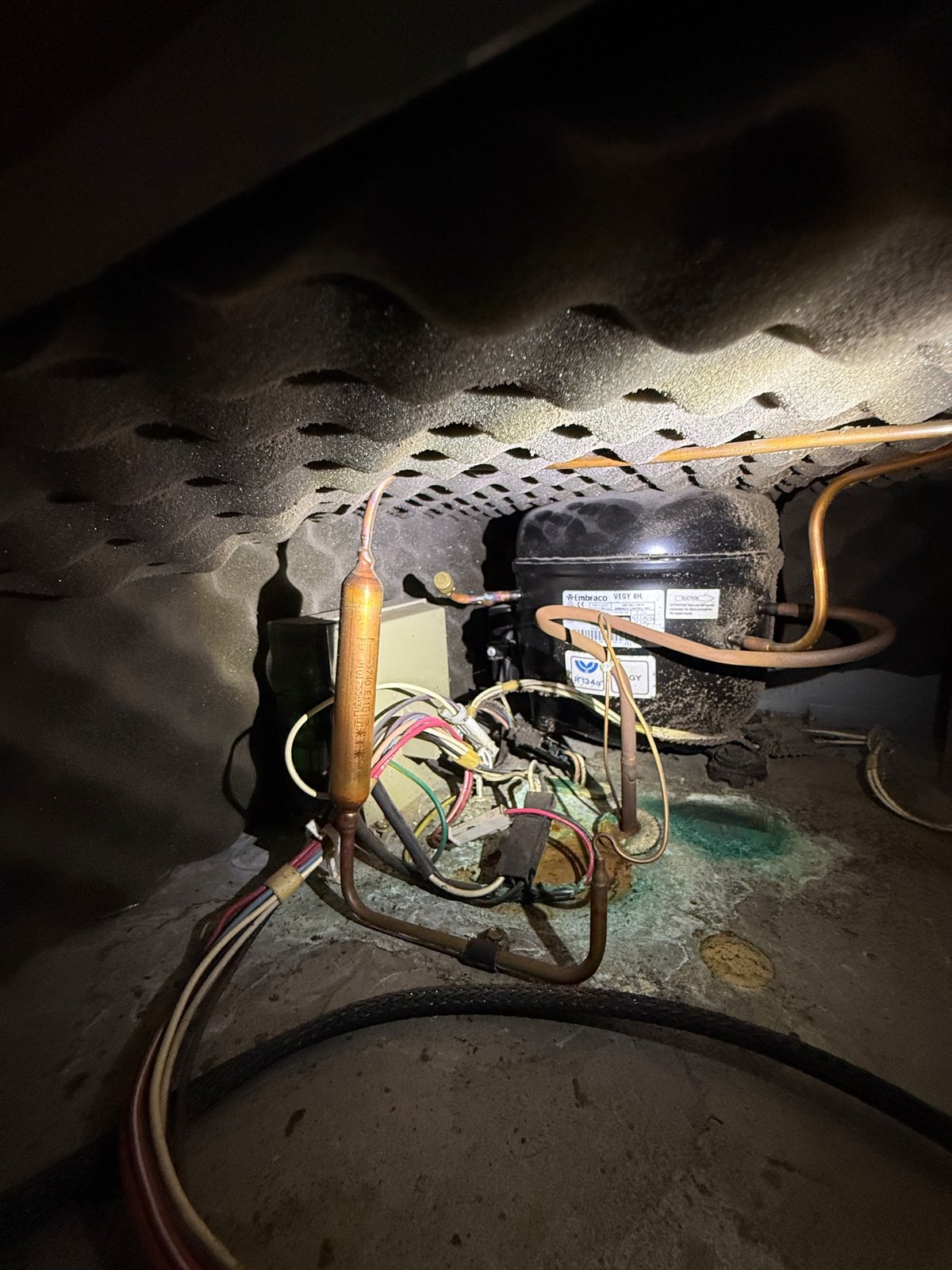
When the inverter fails, the compressor never receives its drive signal. No hum, no click, no cold. Everything else keeps working, because the main control board is fine and it is still happily running the lights and the fans. That combination, a refrigerator that is clearly alive but will not cool, is where a lot of owners are told the compressor is dead. Sometimes it is. On this platform, the inverter fails far more often than the compressor does, and it costs a fraction as much.
The diagnosis: proving it is the inverter, not the compressor
The test is straightforward once the compartment is open. Confirm the control board is calling for cooling and sending the inverter its run signal. Confirm the compressor windings read correctly and are not shorted to ground. Then confirm the inverter produces nothing at its output. Power in, nothing out, a healthy compressor: the inverter has failed. The whole check takes a few minutes with a meter, and it is the difference between a sub-$1,000 repair and a sealed-system estimate that starts around $3,000 on a Thermador built-in.
The repair: one part, one hour, no second visit
The inverter module kit for this platform rides on our trucks, because we replace it often enough across Thermador, KitchenAid, Jenn-Air and Whirlpool built-ins to justify the shelf space. Mike pulled the old module, mounted the new kit, connected the harness and powered the unit back up. The compressor started on the first call for cooling. He was on site from 11:48 to 12:47, diagnosis included, and the refrigerator was pulling temperature down before he packed up.
What it cost, and what the alternatives cost
$984.56 on the card, including tax and card processing: $639.99 for the inverter module kit and $250 for the replacement labor, with the $85 diagnostic credited to the repair. For context, a compressor replacement in our records has a median invoice of $890, and on a Thermador built-in the real sealed-system jobs we have done ran $3,100 and $4,000, because the unit has to come out of the cabinetry and the parts are priced like the brand. A new 42-inch Thermador Freedom built-in lists around $16,500 and sells for $14,000 to $15,000 before installation. On a fifteen-year-old refrigerator with a healthy compressor and a clean sealed system, this is the easiest repair decision there is.
For owners of a 2007 to 2012 Thermador built-in
Three things worth knowing. First, the symptom pattern: lights and display on, fans running, no compressor sound, temperatures climbing. Some units click at intervals as the control retries. That is an inverter until proven otherwise, and nobody should condemn the compressor without testing it. Second, keep the condenser clean behind the top grille: a hot machine compartment is hard on the inverter's electronics as well as the compressor. Third, if an inverter fails a second time, insist on a proper compressor test before the next one goes in; a compressor that is drawing too much current can take a new inverter with it.
We service Thermador refrigeration across Los Angeles. See Thermador appliance repair, refrigerator repair, and appliance repair in Los Angeles. Related reading: an LG compressor replaced under warranty, why a refrigerator stops cooling, a Sub-Zero sealed-system repair, photographed, and real prices.