A San Marino homeowner faced two failures on the same Thermador built-in tower: the microwave showed no power and no display, and the wall oven door below wouldn't close flush. The assumption was that a triple-stack unit this old would need full replacement—cabinetry work, electrical, the works. We diagnosed and repaired both appliances in one visit in May 2026, proving that even complex built-in Thermador configurations are serviceable in place.
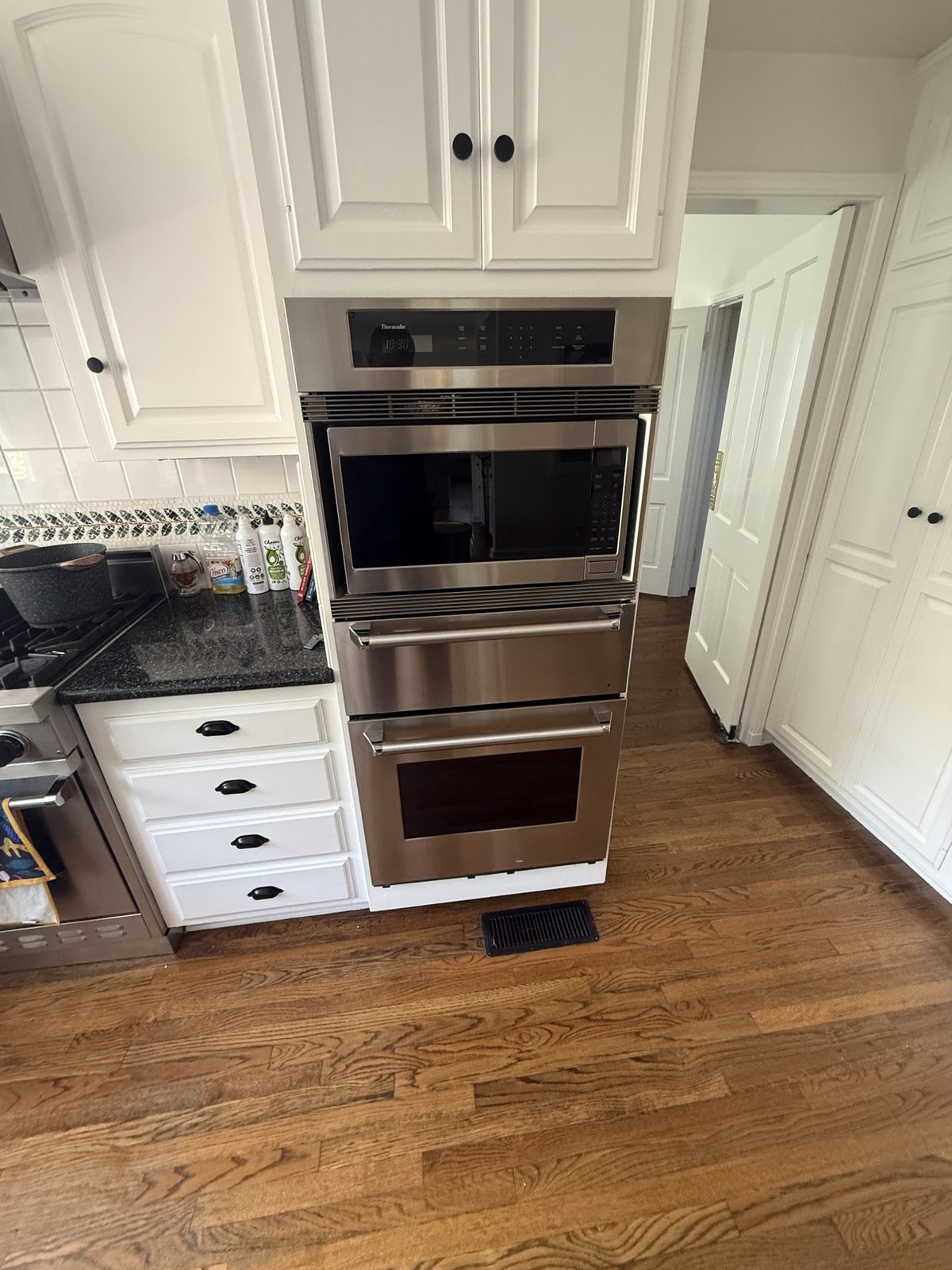
The Setup: Thermador Triple-Stack Wall Unit in a Classic Kitchen
This was a white-painted custom kitchen typical of San Marino estates: Thermador built-in microwave on top, a warming drawer in the middle, and a 30-inch wall oven below. The microwave had been dead for a week—no lights, no display, no response when the door opened. The oven door issue had been gradual: over six months it had become harder to latch, and now it sat a quarter-inch proud of the frame even when pushed shut.
The owner had called a kitchen remodeler first, who quoted north of $15,000 to pull the entire stack and install new units. That quote included cabinet modification because current Thermador dimensions have shifted slightly since this unit was installed. The homeowner wanted a second opinion before tearing out cabinetry, so they called our Glendale shop at (747) 207-2030. We had a technician in San Marino the same afternoon.
Diagnosing a Dead Built-In Microwave: Power Path and Interlocks
A built-in microwave with zero display means no low-voltage power is reaching the control board. The diagnostic path starts at the junction box behind the unit: confirm 120V is present, then check the internal fuse on the control cavity side. Built-in microwaves have a thermal fuse and a ceramic line fuse; either can open if there's been a voltage spike or if the magnetron overheated. Los Angeles gets monsoon-season surges that kill appliances without tripping breakers—we see this every August.
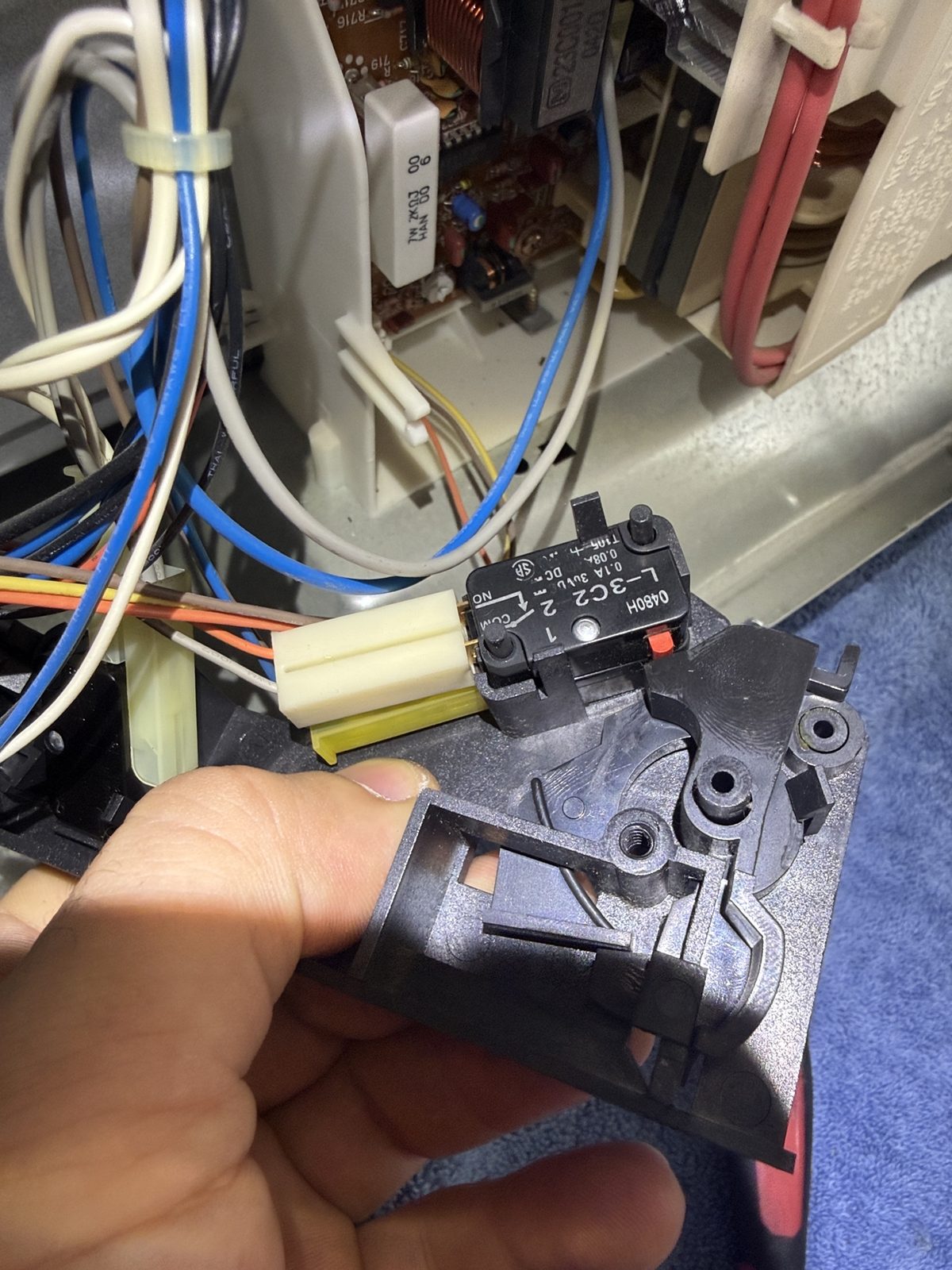
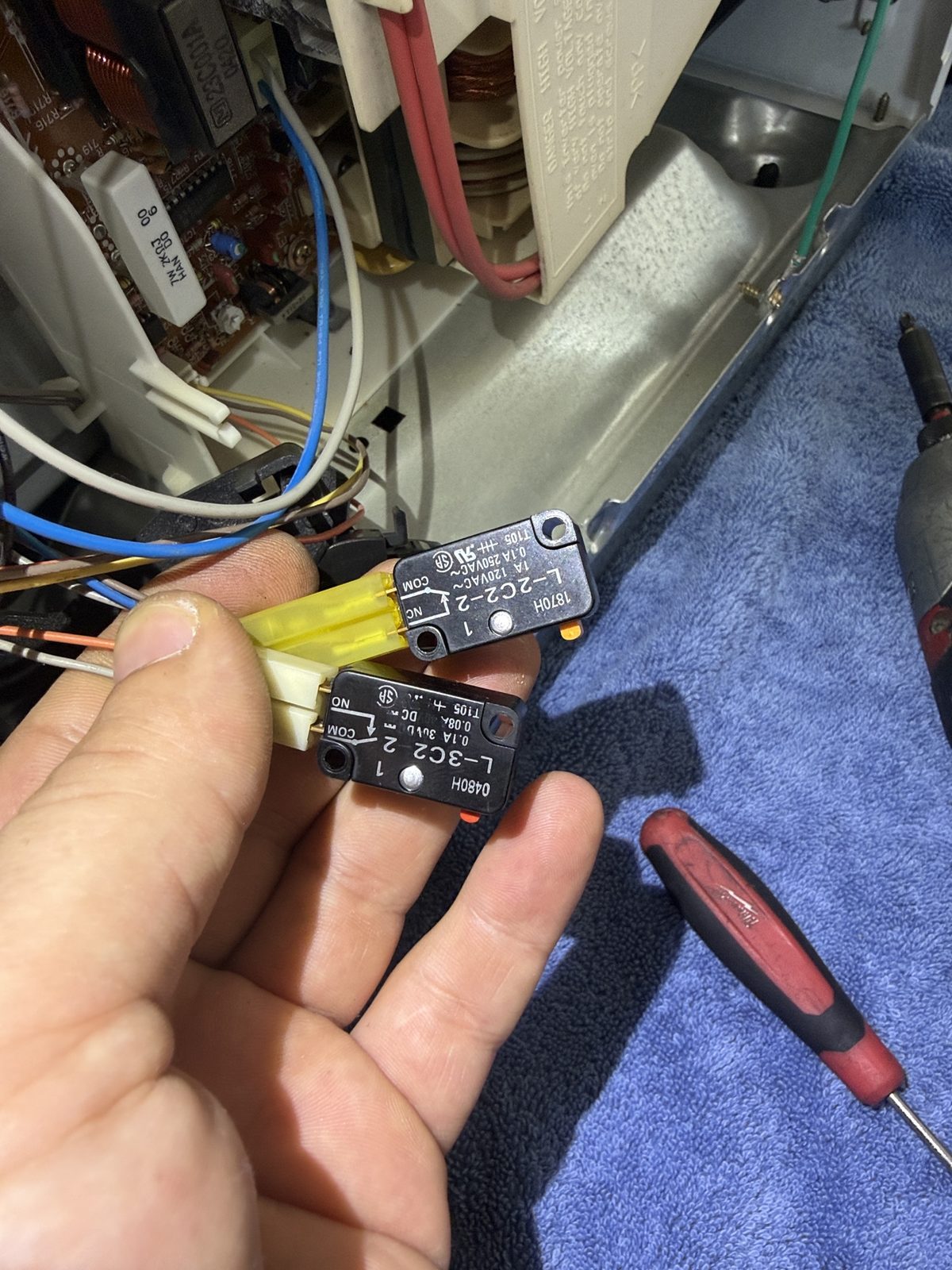
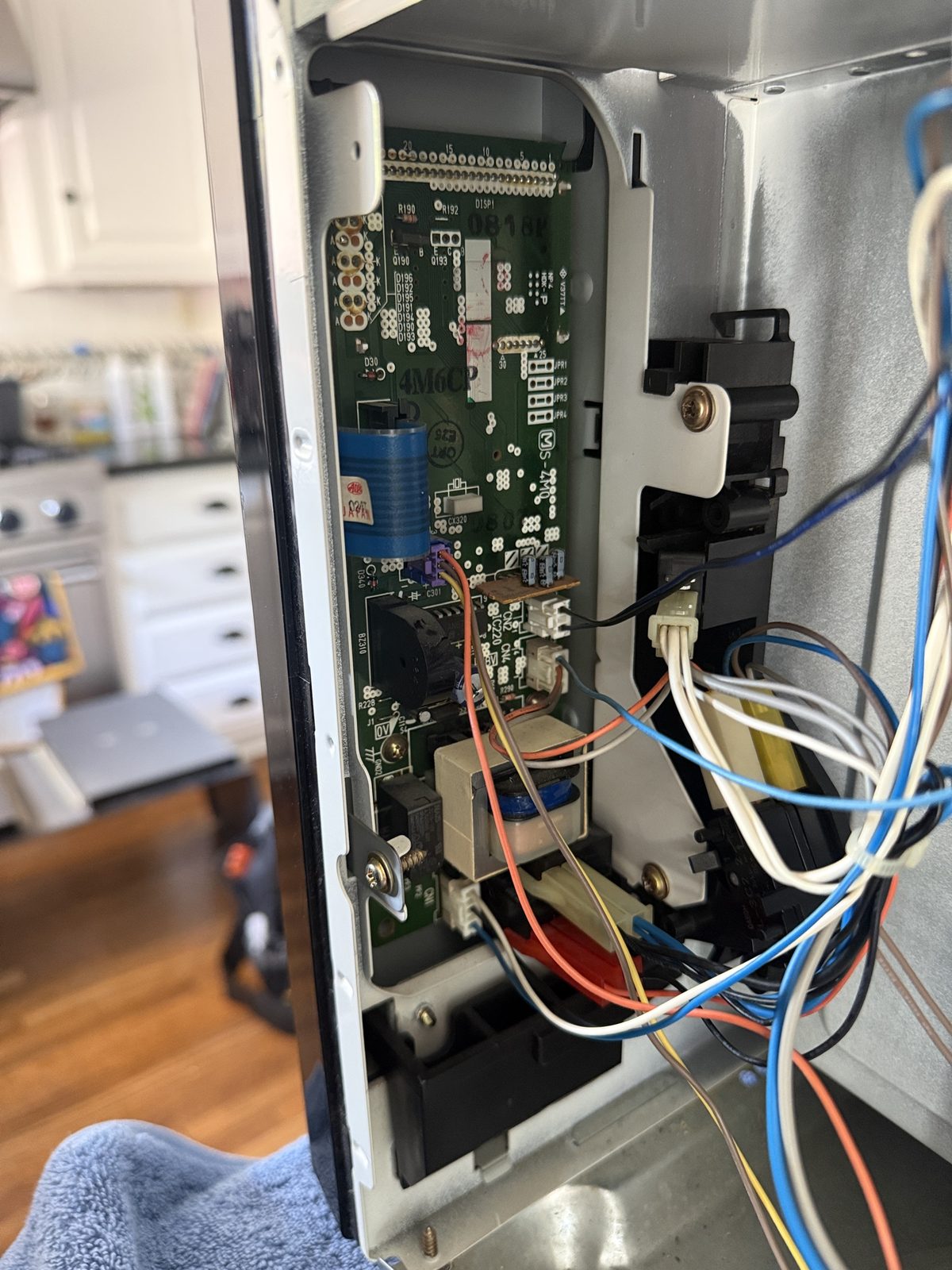
If fuses test good, the next check is door interlock switches. Thermador built-ins use three interlock switches in series: primary, secondary, and monitor. When you close the door, all three must actuate in the correct sequence or the control board never receives the signal to power up. A worn switch won't click fully, leaving the microwave brain-dead. The interlock assembly isn't visible from the front—you pull the unit partway out of the cabinet and remove the control shroud. San Marino homes often have shallow cabinet depth, so there's about four inches of service clearance behind these units if you're lucky.
Our technician tested voltage at each stage of the power path and identified the failure point. The microwave had no structural damage, no burning smell, no magnetron whine. The issue was a single discrete component in the low-voltage supply chain. Once replaced, the display lit up and the turntable spun. Total time to diagnose and repair: 45 minutes.
Why the Thermador Oven Door Wouldn't Close: Hinge Mechanics and Receiver Wear
Thermador wall oven doors are heavy—double-pane glass, steel inner skin, full-extension hinges. The door mounts on two spring-loaded hinges that slot into hinge receivers welded to the oven chassis. Over five to ten years, the receiver pockets wear oval-shaped from the door's weight and the heat cycling. The hinge pins start to sit deeper or at an angle, which changes the door's arc when it closes. Instead of the gasket compressing evenly, the door cocks slightly and won't seat against the front frame.
The technician opened the door to the broil-stop position and inspected both hinges. One hinge spring had lost tension—the door sagged on that side when you lifted it. The hinge receivers showed visible wear grooves where the pins rode. This is not uncommon on Thermador ovens in kitchens that see daily use. San Marino and Pasadena estates cook at home more than LA westside households; we see higher wear rates on ovens here than in Venice or Manhattan Beach.
Hinge repair involves removing the door entirely, extracting the old hinge assemblies, and either replacing the hinges or shimming the receivers depending on wear pattern. If the receiver pocket is oval but the hinge spring still has tension, you can sometimes install a reinforcement bracket. If the hinge itself is fatigued, you replace the pair—Thermador hinges must be replaced as a matched set or the door will twist. The technician made the repair, reinstalled the door, and tested the latch. The door now closed flush with even gasket compression all around.
Same-Day Service and the Cost Reality of Built-In Replacement
Both repairs were completed in one visit. The diagnostic fee was $85, applied toward the repair total when the homeowner chose to proceed. No cabinet modification, no drywall patching, no electrical rework. The entire job took under two hours from arrival to final test.
Contrast that with replacement: pulling a Thermador triple-stack requires an electrician to disconnect hardwired circuits, a contractor to remove trim and possibly modify cabinet openings, then disposal of three appliances. New Thermador microwave and oven units run $3,000 to $5,000 each retail. Add the warming drawer, cabinetry adjustment, and labor, and you're at $18,000 to $25,000 for a full swap. Repair cost is a fraction of that. Even if this unit needs service again in three years, the homeowner is still ahead financially.
Why Built-In Thermador Units Fail and How to Extend Their Life
Thermador built-ins fail for predictable reasons. Microwaves: door interlocks wear from thousands of open/close cycles, fuses blow from voltage spikes, control boards corrode if there's a roof leak above the kitchen. Ovens: hinge springs fatigue, door gaskets compress unevenly, convection fans collect grease and seize. None of these are design flaws—they're wear items on appliances that run at high duty cycles.
San Marino's hard water doesn't directly affect ovens, but it does affect steam ovens and combi units if you have them in the same stack. If your Thermador has a steam function, descale it every six months using citric acid solution, not CLR. Pasadena and San Marino get wind-blown dust from the San Gabriels in fall; that dust infiltrates through the oven vent and coats the convection fan. Pull the oven racks twice a year and vacuum the rear vent louvers. For the microwave, check the door gasket for food buildup every month. A gasket that doesn't seal causes the interlock switches to misalign over time.
When to Repair vs. Replace a Thermador Built-In Tower
If your Thermador built-in is less than 12 years old and the failure is isolated to one component—interlock switch, hinge, control board, door gasket—repair is the correct choice. If multiple appliances in the stack are failing simultaneously, or if the oven cavity has rusted through, or if Thermador has discontinued parts for your model, then replacement makes sense. But don't assume age alone disqualifies a unit. We service Thermador ovens from the early 2000s regularly; parts are available, and the core structure is still sound.
The San Marino job is typical of what we see across LA County. Homeowner gets a replacement quote from a contractor, panics, then calls us for a diagnostic. Half the time it's a $150 part and an hour of labor. The other half requires a control board or a more involved repair, but it's still under $1,000 total. Given that a built-in Thermador stack costs $15,000 to $25,000 to replace with cabinetry work, repair pays for itself even if you have to do it twice.
A&Y Appliances Service Area and Thermador Expertise
We're based in Glendale at 201 N. Brand Blvd. Suite 248, license #49435, and we service all of Los Angeles County and Ventura County—56 cities total. San Marino, Pasadena, South Pasadena, Sierra Madre, Arcadia, and La Cañada Flintridge are all within our same-day service radius. We run daily 8am to 8pm, including weekends. The $85 diagnostic fee covers the trip, the testing, and the written estimate; if you proceed with repair, that $85 comes off the total.
Thermador is one of our most-serviced brands because it's dense in the San Gabriel Valley and Pasadena-area estates. We carry common Thermador parts in the van—door gaskets, interlock switches, igniters, convection fans—so many repairs finish same-visit. For built-in microwaves and wall ovens, we know the quirks: the 2012-2015 control boards that fail early, the hinge design change in 2018, the microwave touchpad membrane issue on certain SKUs. If you have a Thermador built-in that's acting up, call (747) 207-2030 before you call a remodeler. Get the diagnostic first. You'll save five figures if the unit is repairable, which it usually is.